Featured Post

Gearing Up for and Participating In ... The Hour of Code

Lately, we have hit the pause button on our library sleuthing skills and tuned into our tech problem-solving skills to participate in the Ho...

Showing posts with label mrs. ahearn. Show all posts

Tuesday, May 2, 2017

April Is The COOLEST Month

...or so T.S. Elliot would have said if he'd been in the NAPS Elementary School libraries this month!

Even though our schedules went topsy-turvy with the start of MCAS testing, and with April vacation, we still managed to celebrate National Poetry Month in style in each of the libraries!


Each school did something a little bit unique to celebrate...check it out!

Kittredge library detectives know lots about poetry. We celebrated National Poetry Month in different ways and enjoyed listening to and writing our own poems.

The month kicked off with quatrains in grades K-2. We had fun learning about quatrains and writing one as a class before writing our own. Students listened to a variety of silly and fun poems and identified which were quatrains. One poem in particular that made us giggle and inspired many students to write their own quatrains was "If Kids Were Put in Charge of Schools" by Kalli Dakos from her book Don't Read This Book, Whatever You Do! More Poems About School:


Our town poet laureates inspired Mrs. Mullally to lead the students in a performance poetry session based on Odgen Nash's quatrain poem "The Termite."

Based on a fairy tale of their choice, grades 3-5 at Kittredge took on story recreation in poem form. We were inspired in particular by listening to the different perspectives provided within Marilyn Singer's poem about the three little pigs. This poem appears in her book Follow, Follow, a collection of reverso poems based on fairy tales.


The library was transformed into The Beatnik Cafe later in the month so that students could do a poetry book tasting and also perform their poetry in a brief poetry slam jam. We kicked off the class using the library's collection of poetry books to sample new poems and write about them in our menus. Afterwards, we worked to create and revise our existing poems. We finished it all by sharing our favorites with the class.


Sargent & Thomson also got to sample some of Marilyn Singer's reverso poetry with her first book, Mirror Mirror. We talked about how poets tell fairy tales with a slightly different perspective, and we compared and contrasted Singer's poem about Little Red Riding Hood with a traditional version by Trina Shart Hyman.
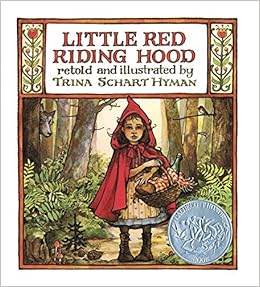

We also had a chance to listen to one of Mrs. Ahearn's favorite writers, Neil Gaiman, recite his fairy tale-inspired poem, Instructions. We discussed how knowledge of fairy tales helps inform our knowledge of other works of literature - it's like finding little clues in a forest of stories!


With the younger grades at Sargent & Thomson we talked about quatrains. A quatrain is a poem of four lines with a rhyming pattern. We read a few by famous authors (and two by Mrs. Ahearn!), and then we worked on one as a class! 


The second graders, who caught on really fast, were able to start working on their own individual quatrains - and some of the students submitted their quatrains to the Elementary Schools Poetry Contest!

Poems That Take Shape 
Students at Atkinson School had the opportunity to write their own poems during the month of April with Ms. Osborne, Atkinson Schools’ Library Media Specialist. They learned about concrete poems, also known as shape poems, through Ode to a Commode by Brian Cleary and Wet Cement: a Mix of Concrete Poems by Bob Raczka. 
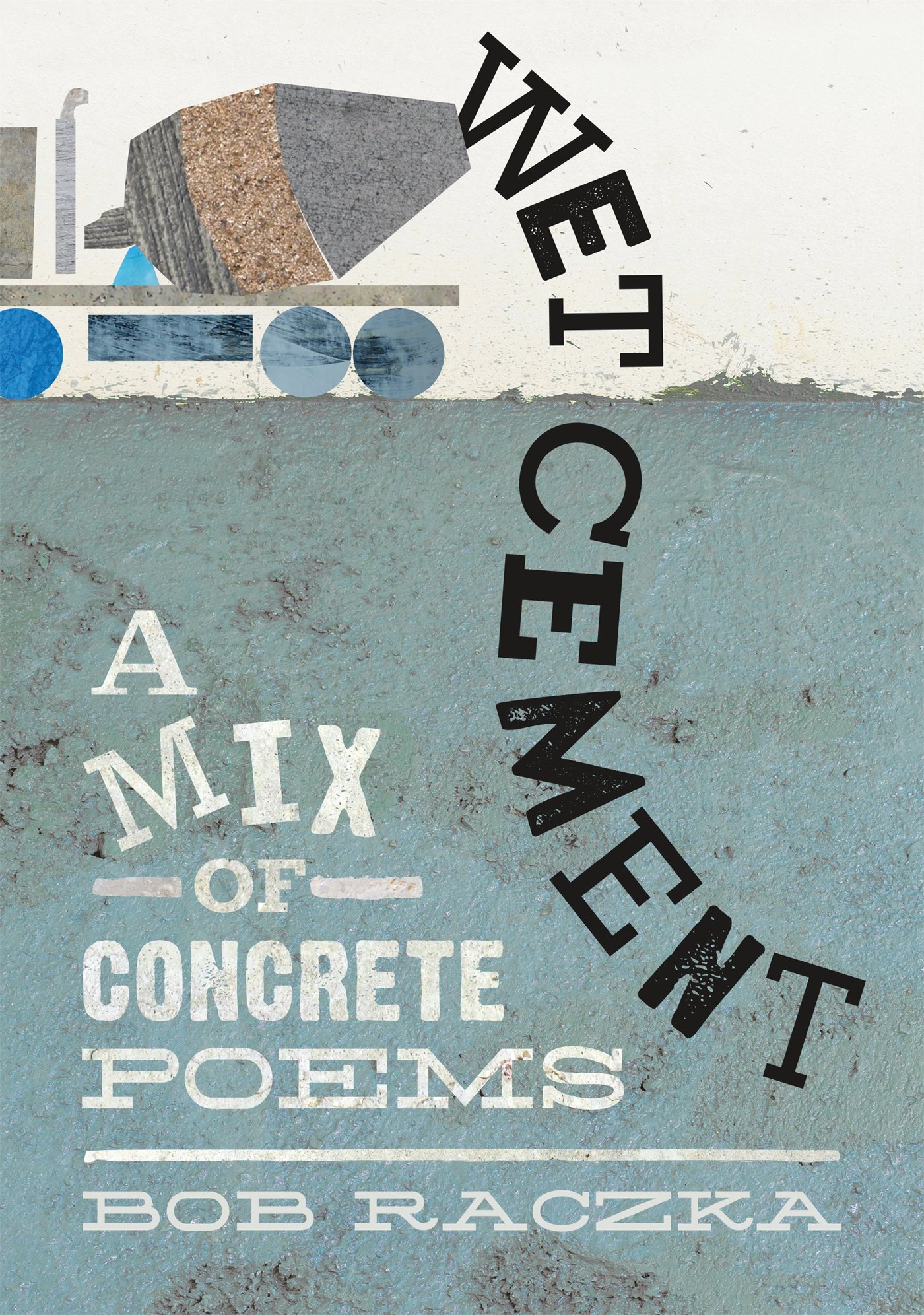


After discussing the characteristics of concrete poems they then created their own poem and added art work. The younger grades used handprints as a template for their poems and were asked to write about the things they can do with their hands while the older grades were asked to come up with a shape or topic that meant something to them such as a hobby, sport or activity that they enjoy. With various poetry books available in the classroom for inspiration the children quickly came up with topics and were engaged in the activity and expressing themselves through the combination of text and artwork. 

That's it for this month, library detectives! Stay tuned for more exciting library news as we wrap up the year in May and June!


- Mrs. Ahearn, Mrs. Mullally and Ms. Osborne

Friday, March 3, 2017

February Fun in the Libraries

Though February is the shortest month of the year - made even shorter by all those snow days and the vacation week! - we still packed in a lot of fun to our library lessons!

The general theme for the month was Nonfiction, as we spent a good amount of time in January talking about Fiction and its elements. However, we still made room for some fun read-alouds!

K-2nd Grade


The younger grades celebrated World Read Aloud Day (February 16th) by working on pieces of art depicting their favorite scenes from a story. Some classes read works by our favorite author, Jacqueline Woodson; other classes listened to Chicken Big by Keith Graves. To spice things up, some classes were able to check out TumbleBooks - an amazing resource hosted by the Stevens Memorial Library. Did you know there's an entire online library of books - chapter books, as well as picture books that can be read to you - available to you 24/7, as long as you've got your Stevens Library card? It's an awesome website, perfect for hosting your own storytimes at home!

 Search for "Tumblebooks" in the Stevens Online Database Catalog!
Click here to find the TumbleBook library in the Stevens Online Databases!
The art the students made after reading the stories is being turned into story quilts that will be displayed in Central Office - here's a sneak peek at what they'll look like!


We also did some work with KWL Charts. KWL stands for "Know/Want (or Wonder)/Learned". The chart is a way for kids to organize their information, and to visually represent the learning they do when they read a work of nonfiction. 


We practiced with nonfiction books, and we noticed that it was a whole lot easier to come up with things we wondered about than things we knew about certain topics! It was fun to see our "Learned" columns fill up after reading nonfiction titles! 

3-4th Grade


The 3rd and 4th graders started discussing the ways in which they can develop their own research topics from essential questions. We talked about Pre-Search - a similar concept to our "what I know" column for the younger kiddos - and how it's important to brainstorm everything you already know about a topic as a guideline for discovering new information. From one essential question about animals and camouflage, students were asked to use the Encyclopedias (the book ones!) to look up the keywords they brainstormed in order to find more information about the topic. Finally, they were asked to develop Thick and Thin Research Questions. A thick research question is robust, requiring a lot of in-depth research. A thin question is a question that can be easily answered in a few words. We talked about why those questions might be helpful in our research. During one class, students were so engrossed in the research and question-writing that they didn't realize a full hour had passed! 

Sharing resources, brainstorming, and researching using the encyclopedias! 

5th Grade


The 5th graders started a discussion on Evaluating Sources of information. One lesson focused in on evaluating text/book sources. We talked about how you need to really look over a book before you decide it's going to be helpful for your research. Things like age, condition, illustrations/images and readability all play a role in determining if a source is the best possible source for use in projects. We worked in groups to evaluate three different books to determine which would be the most helpful to us in a project. It was a hit! 


In our discussion surrounding the Evaluation of Websites (which can be significantly trickier!) we talked about what might be the most memorable acronym to ever appear in the library curriculum: The F.A.R.T Test! 

This acronym is helpful for everyone who goes on the internet - kids and grownups! 


We put a few websites to the test - specifically, a fake website about the Pacific Northwest Tree Octopus!

That's all for now, library detectives!


Monday, February 6, 2017

New Year Fun in the Libraries

Happy 2017, North Andover! This is shaping up to be a great year for our school libraries, as we re-focus on our book collections after a month of coding fun. We split the month into two sections, both devoted to promoting our fiction collections.

Grades K-1

Our youngest library friends spent some time talking about what makes a book a work of Fiction. We talked about how fiction usually has illustrations (as opposed to photographs), characters, and a story with a beginning, middle, and end. We read an example of a fiction story, like the one featured below!

Click here to find this in the MVLC catalog!
Then we worked on identifying whether or not books were fiction or something else in small groups!

Grades 2-3

Second and third graders were tasked with creating Story Maps of different stories. We talked about how almost every fictional story has these five elements: Title, Setting, Characters, "Problem", and "Solution". Once you can dissect a story into those five parts, it's easier to read & understand...and to write your own stories, too! We read a short story together and then students worked in pairs to read and analyze picture books. Some were pretty tricky!

Mrs. Ahearn liked sharing a story from In A Dark, Dark Room for this lesson.

Click here to find this in the Stevens Library catalog!

Grades 4-5

Fifth graders mapped out stories using a Plot Diagram worksheet in Google Classroom. We talked about how plots of fiction stories have a "rising action"/problem and a "falling action"/solution, as well as a climax (the most exciting part, where the story takes a sharp turn), a beginning and an end.


The students worked in pairs on the computers to complete plot diagrams for different picture books. 

Book Tasting!

By far the most exciting part of studying fiction has been our Book Tastings! The librarians created a "menu" for kids to sample parts of the library fiction collections that students might not otherwise have tried. Every class had a selection of books that were developmentally appropriate served as "courses" during the tasting. Kids got a book, analyzed the cover, read a few pages, and then decided if it was a book they might someday like to try. The idea being that every child would leave the library with a list of books that they could try out when next they had library check-out time.

Because we librarians like to make things fun, our book tastings were complete with music, table cloths, candles, trays - the works!


That's all for now, Library Detectives!


Wednesday, November 16, 2016

October Library Delights

Can you believe it's almost Thanksgiving?! Where is the time going? Well, I guess we should expect to feel like the time's flying by when we're having so much fun in the libraries! Here's what we've been up to:

All six grades in all five schools have been talking about how to find books in the library. Since our library instruction in North Andover has been a bit scattered over the years, we thought it best to try and get everyone on the same page, regardless of age. Plus, it's really important for our older grades to be really confident library users, as they will be asked to independently access library information in middle school!

Grades K-1

We've been going over the rules of the library with the younger grades, and making sure they understand how a library works. The "No No Never Box" from last year made another appearance, demonstrating to kids what kinds of things they should keep away from their library books when they bring them home. We read The Pigeon Needs a Bath by Mo Willems, and talked about how the pigeon should definitely not read his library book while he's so dirty!

Click to find this in the MVLC catalog!

 We also talked about the Parts of a Book, and made sure to learn about barcodes.

We've also been talking a lot about finding books in the library, and how we choose our books when we visit the library. Kids tend to choose books impulsively, and they do not always take the time to figure out what the book is about for themselves if they're a pre-reader, so we practiced some of those very important skills.

Grade 2

Our second graders built upon skills they learned last year this month, and we reinforced some of the learning happening in the classroom around Just Right Books. We used the document camera and the projector to practice the Five Finger Rule for determining if a book is "just right". In many classes we were able to watch this short, informative, kid-made video all about the concept:


We also talked a bit about putting the books in ABC Order. First, we tried organizing ourselves into ABC order by last name totally silently and it was really hard! We talked about why organization in a library is important, and why it's helpful to have books organized by the author's last name. Then, we broke up into groups and sorted piles of books into ABC order. 

If your second grader is interested in extra practice, check out Mrs. Lodge's Library's Shelving Game - it's excellent practice! Hopefully we'll get a chance to try this out with more classes.

Grades 3-5

We spent a good amount of time in the older grades going over some basic library skills, since these students have only had sporadic library instruction at the elementary level. As the library media specialists have noticed that some kids are still confused by Fiction and Nonfiction, we spent some time talking and brainstorming in groups about the similarities and differences of each, and what makes a book one or the other. It was a lot of fun!


We've also been talking about searching our library catalog (did you know you can do this from home?!). We make sure to start our searching with a keyword - the most important word in our search - checking the call numbers to see if the book is fiction or nonfiction - and checking to make sure the book is available before finding it on the shelf. 

Some kids liked it so much they wrote a story about it - how cool is that?


Throughout it all, we've been talking a lot about the One Author, One Community project and Jacqueline Woodson's visit. You can check out information about her visit here: 1a1c.northandoverpublicschools.com. All our elementary libraries, as well as the Stevens Library, have copies of her books for kids to read and share!


That's all for now, library detectives! See you soon!


Wednesday, October 12, 2016

September Review!

Hello Library Detectives! What an exciting month it's been in the NAPS libraries! We've switched some spaces around, added some fun new activities...

...oh and WE HAVE TWO BRAND-NEW LIBRARIANS!

 Here's what we've been up to in the schools:

Mrs. Ahearn has been having a blast at Sargent and Thomson and so has Mrs. Mullally at Franklin and Kittredge though we only had a chance to squeeze in a few library lessons before the month was over. In the younger grade classes, we read Red Knit Cap Girl and the Reading Tree by Naoko Stoop. It's a delightful picture book that Mrs. Ahearn first heard about through the legendary Mrs. S at the Stevens Memorial Library. In classes, we used the book to start a conversation about what we know about libraries. We talked about things that are the same between our library and Red Knit Cap Girls, and things that are different.

Click on the picture to find this book in the Stevens catalog!

In the middle grades, we read Miss Brooks Loves Books (and I don't) by Barbara Bottner. We talked about why reading is important, and how the library is a place for kids to explore different genres to find the book that is just right for them.

Click on the picture to find this book in the Stevens catalog!

For the older grades, we took a look at another "Miss" book - this one was a picture book biography of one of Mrs. Ahearn's personal heroes, Anne Carroll Moore. Miss Moore Thought Otherwise by Jan Pinborough is the story of the first librarian to advocate for libraries designed for children. We talked about things we take for granted when going to the library, and things we'd like to learn more about as we go through our library lessons.

Click on the picture to find this book in the Stevens catalog!

In all of our classes, we listened to one another as we organized our ideas about what we know about libraries into a class list. Students in one third grade class at Kittredge wrote down their ideas and practiced their presentation skills with the class using our  new iPevo projector - we had lots of fun sharing things we know and building a common set of goals for this year's learning. Technology helped us organize and display our ideas at both schools.


Some of Mrs. Mullally's students talked about the amount and variety of library materials and others shared their ideas about how libraries work, how books are checked out, and how library spaces are used. Many shared information about genres and series, described fiction and non-fiction books, and what kinds of technology are found in libraries.

We are ready to move forward in our upcoming lessons during the year's quest to be amazing library detectives!