Featured Post

Gearing Up for and Participating In ... The Hour of Code

Lately, we have hit the pause button on our library sleuthing skills and tuned into our tech problem-solving skills to participate in the Ho...

Showing posts with label library. Show all posts

Friday, March 3, 2017

February Fun in the Libraries

Though February is the shortest month of the year - made even shorter by all those snow days and the vacation week! - we still packed in a lot of fun to our library lessons!

The general theme for the month was Nonfiction, as we spent a good amount of time in January talking about Fiction and its elements. However, we still made room for some fun read-alouds!

K-2nd Grade


The younger grades celebrated World Read Aloud Day (February 16th) by working on pieces of art depicting their favorite scenes from a story. Some classes read works by our favorite author, Jacqueline Woodson; other classes listened to Chicken Big by Keith Graves. To spice things up, some classes were able to check out TumbleBooks - an amazing resource hosted by the Stevens Memorial Library. Did you know there's an entire online library of books - chapter books, as well as picture books that can be read to you - available to you 24/7, as long as you've got your Stevens Library card? It's an awesome website, perfect for hosting your own storytimes at home!

 Search for "Tumblebooks" in the Stevens Online Database Catalog!
Click here to find the TumbleBook library in the Stevens Online Databases!
The art the students made after reading the stories is being turned into story quilts that will be displayed in Central Office - here's a sneak peek at what they'll look like!


We also did some work with KWL Charts. KWL stands for "Know/Want (or Wonder)/Learned". The chart is a way for kids to organize their information, and to visually represent the learning they do when they read a work of nonfiction. 


We practiced with nonfiction books, and we noticed that it was a whole lot easier to come up with things we wondered about than things we knew about certain topics! It was fun to see our "Learned" columns fill up after reading nonfiction titles! 

3-4th Grade


The 3rd and 4th graders started discussing the ways in which they can develop their own research topics from essential questions. We talked about Pre-Search - a similar concept to our "what I know" column for the younger kiddos - and how it's important to brainstorm everything you already know about a topic as a guideline for discovering new information. From one essential question about animals and camouflage, students were asked to use the Encyclopedias (the book ones!) to look up the keywords they brainstormed in order to find more information about the topic. Finally, they were asked to develop Thick and Thin Research Questions. A thick research question is robust, requiring a lot of in-depth research. A thin question is a question that can be easily answered in a few words. We talked about why those questions might be helpful in our research. During one class, students were so engrossed in the research and question-writing that they didn't realize a full hour had passed! 

Sharing resources, brainstorming, and researching using the encyclopedias! 

5th Grade


The 5th graders started a discussion on Evaluating Sources of information. One lesson focused in on evaluating text/book sources. We talked about how you need to really look over a book before you decide it's going to be helpful for your research. Things like age, condition, illustrations/images and readability all play a role in determining if a source is the best possible source for use in projects. We worked in groups to evaluate three different books to determine which would be the most helpful to us in a project. It was a hit! 


In our discussion surrounding the Evaluation of Websites (which can be significantly trickier!) we talked about what might be the most memorable acronym to ever appear in the library curriculum: The F.A.R.T Test! 

This acronym is helpful for everyone who goes on the internet - kids and grownups! 


We put a few websites to the test - specifically, a fake website about the Pacific Northwest Tree Octopus!

That's all for now, library detectives!


Monday, February 6, 2017

New Year Fun in the Libraries

Happy 2017, North Andover! This is shaping up to be a great year for our school libraries, as we re-focus on our book collections after a month of coding fun. We split the month into two sections, both devoted to promoting our fiction collections.

Grades K-1

Our youngest library friends spent some time talking about what makes a book a work of Fiction. We talked about how fiction usually has illustrations (as opposed to photographs), characters, and a story with a beginning, middle, and end. We read an example of a fiction story, like the one featured below!

Click here to find this in the MVLC catalog!
Then we worked on identifying whether or not books were fiction or something else in small groups!

Grades 2-3

Second and third graders were tasked with creating Story Maps of different stories. We talked about how almost every fictional story has these five elements: Title, Setting, Characters, "Problem", and "Solution". Once you can dissect a story into those five parts, it's easier to read & understand...and to write your own stories, too! We read a short story together and then students worked in pairs to read and analyze picture books. Some were pretty tricky!

Mrs. Ahearn liked sharing a story from In A Dark, Dark Room for this lesson.

Click here to find this in the Stevens Library catalog!

Grades 4-5

Fifth graders mapped out stories using a Plot Diagram worksheet in Google Classroom. We talked about how plots of fiction stories have a "rising action"/problem and a "falling action"/solution, as well as a climax (the most exciting part, where the story takes a sharp turn), a beginning and an end.


The students worked in pairs on the computers to complete plot diagrams for different picture books. 

Book Tasting!

By far the most exciting part of studying fiction has been our Book Tastings! The librarians created a "menu" for kids to sample parts of the library fiction collections that students might not otherwise have tried. Every class had a selection of books that were developmentally appropriate served as "courses" during the tasting. Kids got a book, analyzed the cover, read a few pages, and then decided if it was a book they might someday like to try. The idea being that every child would leave the library with a list of books that they could try out when next they had library check-out time.

Because we librarians like to make things fun, our book tastings were complete with music, table cloths, candles, trays - the works!


That's all for now, Library Detectives!


Thursday, December 1, 2016

We're Thankful for November Library Lessons

November was by far the biggest month yet for our library program here in the North Andover Public Schools! Not only did we have lots of fun in the library with our lessons, but we also had Jacqueline Woodson come to speak to the entire school district!


It was so exciting, and lots of students have been requesting books by Ms. Woodson since the visit.

November was a combination of traditional library lessons and technology lessons, which made it a very dynamic month! The first weeks of library lessons had kids participating in Scavenger Hunts - the kindergarteners went on a hunt for monkeys in the library after reading Monkey and Me by Emily Gravett, which got them familiar with all of the different sections of the library.

Check out this book in the Stevens library catalog!
The first and second graders found monkeys in the library too, but they had to use clues to find specific monkeys - this scavenger hunt tested their knowledge of the sections of the library, and we found it to be trickier than we thought!

The 3-5th graders participated in a scavenger hunt that mimicked their lesson on using the catalog - we ran a keyword search in the catalog, cut out the titles, and broke up into teams to try and find as many of the titles in the library as we could! We've noticed that the older kids are much more comfortable finding books in the library on their own now, since they now fully understand the information from the catalog. 

December has been all about the Hour of Code - check out our post to find out more!


Wednesday, November 16, 2016

October Library Delights

Can you believe it's almost Thanksgiving?! Where is the time going? Well, I guess we should expect to feel like the time's flying by when we're having so much fun in the libraries! Here's what we've been up to:

All six grades in all five schools have been talking about how to find books in the library. Since our library instruction in North Andover has been a bit scattered over the years, we thought it best to try and get everyone on the same page, regardless of age. Plus, it's really important for our older grades to be really confident library users, as they will be asked to independently access library information in middle school!

Grades K-1

We've been going over the rules of the library with the younger grades, and making sure they understand how a library works. The "No No Never Box" from last year made another appearance, demonstrating to kids what kinds of things they should keep away from their library books when they bring them home. We read The Pigeon Needs a Bath by Mo Willems, and talked about how the pigeon should definitely not read his library book while he's so dirty!

Click to find this in the MVLC catalog!

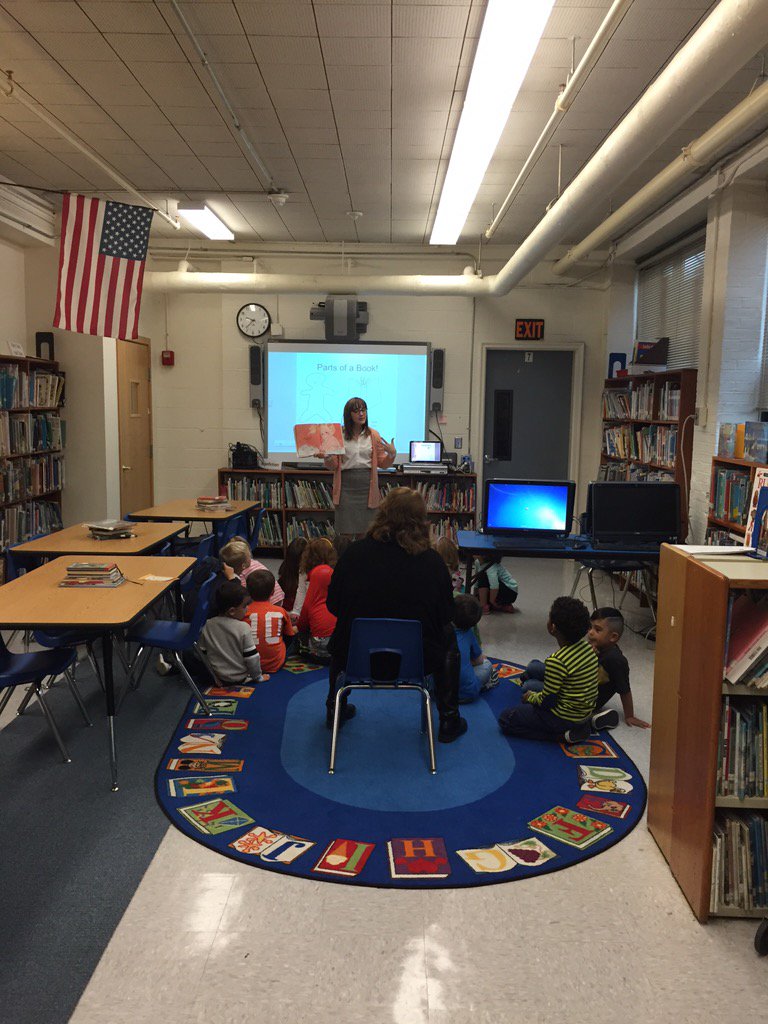
 We also talked about the Parts of a Book, and made sure to learn about barcodes.

We've also been talking a lot about finding books in the library, and how we choose our books when we visit the library. Kids tend to choose books impulsively, and they do not always take the time to figure out what the book is about for themselves if they're a pre-reader, so we practiced some of those very important skills.

Grade 2

Our second graders built upon skills they learned last year this month, and we reinforced some of the learning happening in the classroom around Just Right Books. We used the document camera and the projector to practice the Five Finger Rule for determining if a book is "just right". In many classes we were able to watch this short, informative, kid-made video all about the concept:


We also talked a bit about putting the books in ABC Order. First, we tried organizing ourselves into ABC order by last name totally silently and it was really hard! We talked about why organization in a library is important, and why it's helpful to have books organized by the author's last name. Then, we broke up into groups and sorted piles of books into ABC order. 

If your second grader is interested in extra practice, check out Mrs. Lodge's Library's Shelving Game - it's excellent practice! Hopefully we'll get a chance to try this out with more classes.

Grades 3-5

We spent a good amount of time in the older grades going over some basic library skills, since these students have only had sporadic library instruction at the elementary level. As the library media specialists have noticed that some kids are still confused by Fiction and Nonfiction, we spent some time talking and brainstorming in groups about the similarities and differences of each, and what makes a book one or the other. It was a lot of fun!


We've also been talking about searching our library catalog (did you know you can do this from home?!). We make sure to start our searching with a keyword - the most important word in our search - checking the call numbers to see if the book is fiction or nonfiction - and checking to make sure the book is available before finding it on the shelf. 

Some kids liked it so much they wrote a story about it - how cool is that?


Throughout it all, we've been talking a lot about the One Author, One Community project and Jacqueline Woodson's visit. You can check out information about her visit here: 1a1c.northandoverpublicschools.com. All our elementary libraries, as well as the Stevens Library, have copies of her books for kids to read and share!


That's all for now, library detectives! See you soon!


Wednesday, September 14, 2016

New for 2016-2017

Hello, library detectives! We've got a lot of really fun stuff coming down the pipeline for this year in the North Andover public elementary schools, and we're so excited to get started!

We have two new library media specialists (LMS) joining us this year - if you haven't met Mrs. Mullally yet, check out her introductory blog post here. One more librarian will be joining the team very soon, so stay tuned!

In addition to our staff changes, we've also changed up our library schedule a bit. This year, every student in the elementary schools will get to see their school's LMS on a regular basis - last year, we only had one LMS across five schools so achieving that goal was pretty tricky.

We're also hoping to increase co-taught lessons between the LMS and classroom teachers, which we hope will enhance the already stellar learning happening in the classrooms.

Finally, we'll be re-thinking our library spaces in order to maximize student learning and support all learning styles and abilities.

Are you ready? Library time begins soon, so get excited North Andover!

- Mrs. Ahearn


Tuesday, September 6, 2016

NAPS Has a NEW Elementary School Library Media Specialist!


Greetings and salutations! This is Colleen Mullally checking in here on the first day of school to introduce myself as your newest school library media specialist. Along with Courtney Ahearn, I'm looking forward to an amazing year at NAPS in the elementary schools.

Because I have been added to the team, all students at Franklin and Kittredge will be meeting with me regularly. I will be using this blog to post from time to time with updates on what we're up to in the library and in the classrooms. We'll be up to way more than checking books in and out!

Where will I be? My days at Franklin are Mondays, Tuesdays, and Thursdays. I'll be at Kittredge on Wednesdays and Fridays.

Email me at mullallyc@northandoverpublicschools.com and follow us on Twitter at NAPS_Librarians


Tuesday, June 21, 2016

End of Year Wrap-Up

Well, folks, that's about it for the 2015-2016 school year. It was my very first year here in North Andover, and I think we accomplished quite a bit. Across all five elementary schools, we:

I'll be returning next year to North Andover (we're still looking for a few good library media specialists to join our team!) and I can't wait to expand on what we've already learned! In the meantime, I hope everyone has a safe and happy summer, and that everyone - that means you too, parents! - participates in Summer Reading! 

Summer @ The Stevens information, including information regarding
summer reading incentives, can be found here: 


Our school reading list is here: 


If you have any questions regarding summer reading, or would like personalized recommendation lists for your child, please feel free to contact me at ahearnc@northandoverpublicschools.com! 

Thank you, Library Detectives!


Monday, June 20, 2016

Summer Reading 2016!

Here's the official flyer for Summer Reading 2016 here in North Andover! A reminder - none of the titles listed are required, they're here to get kids thinking about what to choose this summer. Students can read whatever they like as long as they try to read at least 20 minutes every day. It's so important to keep those brains active over the summer! 

Click here, or on the image below, to download the list!


Thursday, June 2, 2016

Library Fun in the Month of MAY

WOW EVERYBODY CAN YOU BELIEVE IT IS JUNE ALREADY?! This year has flown by, in a whirlwind of stories and activities, and I can't believe we only have a month left of library fun!

Much of this month was spent catching up with classes I'd not had a chance to see for the past few months, so there were lots of scavenger hunts and some fiction vs. nonfiction discussions. With the big, shiny, new changes happening*** to the library program, we'll be able to see many more classes on a more consistent basis starting in the fall.

***Our changes are that the superintendent has added 1.5 new library positions to the schools! We'll be hiring one full-time librarian, and a "shared" librarian that will work partly at the Stevens and partly in one of the schools. Hooray for more library media specialists!

Grades K-2


In many classes, we continued to talk about Fairy Tales this month, exploring both traditional, and fractured, versions of our favorites. In one second grade class, we talked about how the "original" versions of our favorites like Snow White were unexpectedly different - there's no "true love's kiss", the prince drops Snow White's coffin and the apple pops out!


...the kids also really enjoyed the fact that I gave 6 of the 7 dwarfs a grizzly, Cockney accent (and the 7th a high, squeaky voice).

In some classes we also were able to talk about our favorite Fairy Tale characters along with a reading of my favorite book from my own childhood, The Jolly Postman; Or, Other People's Letters. The kids got a kick out of the fact that the letters are INSIDE the book! 


This is tough to find in libraries, since it has so many added parts that can get lost, but
a few libraries in the MVLC have it available. 

We then wrote letters to our favorite characters (the younger grades used a template), and the characters wrote back! Writing our letters gave us some good practice on what a letter looks like, what to capitalize, what words you use in a letter, etc.

We also used stories from our library to talk about the parts of a story (beginning, middle, end). We'd read a story (any story works!), and then afterwards we'd talk about the "parts" - what was the beginning? Where did the middle start? What happened at the end? Using the SmartBoards, we'd write out each of the three parts, then swirl them around and mix them up - did the story still make sense? Why or why not? 

Grades 3-5


The older grades used a bit of technology this month, either for the first time (as in the case of 3rd Grade and using Google Slides) or as a culmination of activities. 4th and 5th grade classes were introduced to Typing Club, a wonderful bit of free technology on the web that teaches proper typing methods for kids. It works wonderfully with our students's Google accounts, but you can sign in without one and still go through all the typing levels!

We also started talking about Summer Reading (more info on that next month!) and ways to find good books to read over the summer. The big takeaway for them was that the best group of people to recommend good books is their friends! 

Finally, we tasted a bit of a new genre: Short Stories! I read a few selections from Cynthia Rylant's Every Living Thing, and we talked about what you can expect when you pick up a collection of short stories - each story will have different characters, a different plot, and most of the time you can read the whole story in one sitting.

Find it in the Steven's Library's story story collection in the Children's Room!

That's it for the month of May, Library Detectives! SEE YOU IN JUNE!


Monday, May 9, 2016

April & National Poetry Month!

Apologies for the delay in posts - it's been a busy and exciting time in the NAPS libraries! We're almost at the end of the year (yikes!) and I've been focusing quite a bit on making sure our library collections are ready for their long summer's nap between this year and next.

April was National Poetry Month and we celebrated in the schools by holding a poetry contest - students were encouraged to submit poems to the contest, on any subject and in any style, and we chose two winners from each school. Originally, the winners were going to be "selected", but there were so many wonderful entries that we decided to just choose two names randomly. Our winners received poetry books to further inspire their creativity, and everyone who submitted a poem will have their work featured in the Poetry eBook we're currently working on.

Here's a sneak-peek at the cover:


I'll be sure to let everyone know when the book is ready! 

K-2 

In the younger grades, we've been having a lot of fun exploring poetry. In a few kindergarten classes, we brainstormed our own haikus - kids really enjoyed being able to pick out the subject, and sound out the syllables in each line. Here's an example of our work:


We read poems by Jack Prelutsky, Shel Silverstein, and more! We also made sure to make note of where the poetry books are in our libraries (they're in the nonfiction section under 811) to tie-in the lesson to the library space.

Here's a video from the Shel Silverstein official Youtube channel that we were able to watch: 


The 1st and 2nd graders got a chance to write their own haikus, and many of them submitted them to the poetry contest, so be on the lookout for some wonderful haikus! 

3-5

The older grades also had a wonderful time exploring poetry, with works like Hoops by Robert Burleigh and Follow, Follow by Margaret Singer. We talked about how poetry does not have to be about mushy-gushy stuff, and that as long as its about something you feel strongly about, it works! 

 Check this out in the MVLC catalog!
Check this out in the MVLC catalog!
In many classes, we also had time to play one of my favorite games - "Exquisite Corpse"! It sounds a lot more gruesome than it is, I promise! The way you play is: 
  • Everyone breaks up into groups of 3 or more.
  • One person in the group writes a few lines of a poem on a piece of paper.
  • After they are done, they fold the paper over so that only the last line that they wrote is visible.
  • Then, they pass it along to the next person in the group, who looks at the one line of the poem and writes their own few lines.
  • The second person folds the paper over again so only the last line of what they wrote is visible, and then they pass it along. 
  • This goes on until the poem is finished and everyone has had a few turns. 
This was a really fun activity that the kids loved, and it definitely got the creative juices flowing! 

That's all for April, Library Detectives! Stay tuned for information about library MAYhem happening this month!


Wednesday, April 6, 2016

March Madness!

March was another banner month for our libraries here in North Andover! I can't believe the month went by so fast! We're fast approaching our last few months of school, and we're still rolling out super fun and exciting library lessons for all grades!

Kindergarten - 1st Grade

Since many of the classes and schools have been focusing on Fairy Tales and retellings, we've continued our work with fairy tale books in the younger grades. We've focused a lot of our discussions on what the essential components or ingredients of each fairy tale are (for example, the essential components of "Goldilocks and the Three Bears" are that someone sneaks into someone else's house and tries all their stuff!). Then, we've started talking about ways that some authors change some of the ingredients to make a new, fractured fairy tale! A new favorite story we've read has been The Frog Prince Continued by Jon Scieszka.

Click here to find this title in the Stevens Library collection! 
We talk about all the fairy tales that are mentioned in this book, and characters we recognize. It's been a big hit with kids and teachers!

With the 1st Graders, we've talked about those ingredients and used a graphic organizer to try and start using fairy tale ingredients to write their own fairytales - so far, it's going really well!

In some classes, we've also talked about Story Elements - what makes up the parts of a story? We read a story and map out the setting, characters, problem and solution. Understanding the components of a story is the first step towards being able to construct a new story!

2nd Grade

Our second graders have been working on finding Nonfiction Books in the Library using a fun scavenger hunt designed to help familiarize them with the information presented in our Online Catalog. Occasionally, we've been able to tie-in the books they're looking for with the subjects they're working on in class; other times, it's a general scavenger hunt for books about every second graders favorite thing: ANIMALS!

We've also begun using the chromebooks a bit more in the last half of the year with the second grade classes, with many teachers requesting either practice logging in or coding, or researching using the databases.

3rd Grade

Third graders got a taste of what April will be all about: poetry! We've been reading Hoops by Robert Burleigh, Follow Follow: A Book of Reverso Poems by Marilyn Singer, and a few selections from the Bill Martin Jr. Big Book of Poetry. After we talk about how poetry can be about anything that makes you feel, we got a chance to write a few of my personal favorite kind of poems - HAIKU! Some of the poems have been really wonderful - and hopefully will inspire some future poets to enter into our Poetry Contest happening this April!


4th-5th Grade

Our older grades have continued to use our online resources to help discover new information to help with research projects. Many classes are working on persuasive writing, so we talked about how using Kids InfoBits and the magazine and newspaper results will help them find opinion pieces to help them persuade one way or the other about a particular topic.

We've also continued exploring our Google software programs, with many classes either creating brochures using Google Docs or creating presentations using Google Slides.

Not to get too tech-heavy, we've also tried to incorporate a few read-alouds in there, and will be focusing a lot of our work on poetry in April to tie-in to National Poetry Month.

That's all for now, Library Detectives! See you soon!

Wednesday, March 9, 2016

February Library Fun

February was a whirlwind of library excitement, guys! Because it's a short month made even shorter by our February break, I'll be brief with our library re-cap.

K-2nd Grade

Our younger grades starting talking about fairy tales and folk tales in their classes, so we decided to carry on that discussion in the library. We read a lot of wonderful books, and talked about where to find fairy tales and folk tales in our library. The magic number or secret code is 398.2 - any library that uses the Dewey Decimal System will have their books in that section.

Now, a lot of kids asked, "Why are the fairy tales in with the information books? Aren't they made up?" The answer to that is - because fairy tales are so culturally significant, and because they are found across cultures and continents, they impact people in the same way history or geography might. That's why they get their own special section! 

Here are some of the titles we read:

Traditional Fairy/Folk Tales

Puss in Boots by Charles Perrault
Cinderella trans. by Marcia Brown
Why the Crab Has No Head by Barbara Knutson
Nontraditional Fairy/Folk Tales 

The Rough Face Girl by Rafe Martin

Cinder Edna by Ellen Jackson

3rd-5th Grade

The older grades and I have been supporting our work using Google Docs and Google Slides to organize our research. We've been using our Online Databases to discover new information, and we're starting to realize that Google might not be all it's cracked up to be! We've also re-opened our Code Studio work to continue learning about computer science and coding.

That's all for now, Library Detectives! Boy, this year is flying by!


Tuesday, February 9, 2016

January Review!

Wait, January's already over?! How did that happen?! I guess when you're bopping between five schools, time sure flies!

This past month we've been able to coordinate more of what's happening in the library with what's happening in classrooms at various grade levels, which has meant some more effective learning and support for classroom teachers! As always, I try to weave in general library and research skills with what kids are already learning, to provide just in time library instruction instead of just in case instruction.

Kindergarten/1st Grade


Our kindergarten classes are now all experts on the "Secret Code" for picture books ("It's the letter EEEEE!"), so we've begun talking about the other codes in our library. We've taken a look at some nonfiction books, and compared them with picture books about the same subject. For example, here are two books about bears - which one will tell a story, and which will give us information? We then talked about things we already knew about bears, and used the text features in the nonfiction books (the table of contents, the glossary, and the index) to find out what we wanted to know about bears. Aftewards, we read A Visitor for Bear and compared what we'd learned about bears to how the bear acted in the story - what was the same? What was different?

Click to find this in the Stevens Memorial Library catalog!
In some classes, we've also done a lesson on Judging a Book By It's Cover. Even thought most things you shouldn't judge by their appearance (people, burritos, etc.), a picture book's cover can often tell you lots of great information about what the book is going to be about! We read 3-4 books and before each one, we made predictions about what the book would be about, and how it would make us feel; after reading, we'd compare what happened with our predictions. The clear favorite of all the books we read was Tap the Magic Tree by Christie Matheson:

Click to find this in the Stevens Memorial Library catalog!

2nd Grade

The second graders got a chance to try out some old-fashioned library detective work as we used nonfiction books to explore information about animals. Some of the older grades had used the databases to look up information on different kinds of animals, so I figured having the second graders practice with books was a great transition!

Most of our school libraries have animal encyclopedias, so we talked about how an encyclopedia is a different kind of nonfiction book - it's a reference material that we use to quickly look up information, and we don't have to read the whole thing to get what we need! I was very impressed by how excited the kids were about choosing an animal, and using the text features to figure out what that animal ate and where that animal lives.

3rd Grade

The third graders and I have been doing a bit of research online, and that's lead to a discussion about plagiarism. While certainly not a huge problem in grade school, plagiarism is a concept that even high school and college students struggle to understand; therefore, it's important that we get kids thinking early about what it means to give credit to sources, and to make sure they understand the difference between learning and copying information. For this lesson, I used a lot of resources from Common Sense Media, a wonderful website for parents and teachers that includes information on age-appropriate media for kids and digital safety!

4th & 5th Grade

The oldest grades have been working on practicing using our online databases to do research, as well as creating Google Presentations and Organizing our Research. We've also been getting a sneak peak at creating Works Cited pages, something that's required of all 6th graders. The idea is, the more we reinforce the importance of proper citations, the less trouble students will have in middle and high school.

Here's the citation page they use at the middle school:


That's all for now, library detectives! Have a great February break!

Monday, January 4, 2016

Happy New Year, and a December Review!

Happy 2016, NAPS library fans! I can't believe we're already in a brand-new year!

Last month, we completely switched my library schedule in order to free up more time with other classes that aren't scheduled for "check-out time" on the day I'm at each school - with the exception of Kittredge, where I get to see every class already! This change has been amazing - it has allowed me to visit with more classes, and as the year progresses, I'll be able to develop library lessons catered to each grade and their learning objectives.


The Hour of Code!


December was mostly all about chromebooks - for some classes, using the chromebooks during a "library instruction" block was the very first time they'd had a chance to log in, which is awesome! We hosted approximately 42 Hours of Code across all five elementary schools, which means that over 1,000 elementary school students experienced their first taste of computer science instruction! 
Pretty neat, huh?

We are still analyzing the exit ticket data we collected from the Hour of Code, but here's a snapshot of how the kids felt during the process - the larger the word is, the more often kids used it in their description of how they felt during the Hour of Code:

So glad our students are feeling mostly "happy and excited" about computer science!


Other Library Activities 


This month, I also had a chance to share some very fun stories with the younger grades, including my all-time favorite winter-themed picture book, Extra Yarn by Mac Barnett.

Click on the picture to find this book in the Stevens Memorial Library catalog!
This cozy read is all about the virtues of being a kind and giving person - and Mac Barnett and Jon Klassen make a truly remarkable team. The pictures tell as much of the story as the words do, and the ending leaves lots of room for creative discussion and literary exploration.

Up Next: databases, using our reference books, computer science, and an exciting project for the 5th Graders! 


Thursday, November 19, 2015

We're "Thankful" for November Library Lessons

Hey there, library detectives! We're more than half-way through November, and there's a ton of exciting stuff going on in the school libraries! Over the next few weeks, the grade level lessons will start to change as we get into more grade-specific library learning, but for now we're still making sure that all the grades have the basic foundational knowledge to help them move forward in their learning.

Kindergarteners

The kindergarteners have continued to learn about the basics of books and the library, and we've started to try and coordinate the books we read in library with what's happening in the classroom. In a few kindergarten classes, that's meant talking about what Being an Author means - what is their job? Can anyone be an author? Our first author was Marc Brown, and we read one of his Arthur books!

Click on the image to see this title in the Stevens Memorial Library catalog!
I've mentioned this to a few classes, but! I'm hoping to encourage more kid-author work by letting students know that any book that they write themselves (using a craft book, or even just paper and some staples!) can be put into our libraries. If you know of any kid-authors that would appreciate having their book in an actual library, let them know about this great opportunity!

In some kindergarten classes, they've been talking about animal habitats and informational books. In those classes, we've read an example of Fiction and one Informational Book all about animals!


Younger Grades (K-2)

In the younger grades, we've been talking a lot about what happens in the library - but we haven't talked too much about what happens when you take your books home. It's important to be explicit about the expectations we have about the care and treatment of our library books.

The "NO NO NEVER" Box

Note: this isn't our exact box - ours is a little less "piratical"! 
The "No No Never" box is full of things you should never have around your library books at home - things like water, candy, scissors, glue, markers, a baby (a picture of a baby, that is!) and a puppy (a stuffed animal!). We brainstorm why you'd want to protect your library books from all of these things, and the kids have a lot of fun with it! If there's time, we read one of two books:

Click the image to find this in the Stevens Memorial Library Catalog!
OR

Click the image to find this in the Stevens Memorial Library Catalog!

Older Grades (3-5)

At this point in the school year, it's important that the older grades start to get familiar with using the chromebooks in the library. They'll be using them throughout the year for research and class projects, and the 5th graders will be expected to know how to find online resources once they get to middle school, so starting them on technology early in the year is crucial.

For most classes, we've just practiced logging on using the student ID and password assigned to each student. Then, we practice going to the Elementary Libraries website and finding our Online Databases page.With the 4th and 5th graders, we've explored the Gale databases a bit, and even gotten a chance to do some practice research! 

Using the chromebooks will be something we do throughout the year, so it's important that the students remember their username and password so we can spend less time logging in and more time learning! 

After the students become familiar with using the databases and online encyclopedias for research, we'll begin our discussion about Online Safety and Digital Citizenship. 

.....

Well, that's all for now, library detectives - see you soon!


Tuesday, November 17, 2015

Big Changes!

This week I'll be posting a November update on what we've been doing in the classes (spoiler alert: it involves the new chromebooks!), but I thought I'd share some pretty interesting news.

Embedded image permalink
Photo credit: Kara Larcome, 2015.
In December, we'll be switching up the library schedule in order to maximize the library instruction time that every grade in every school has access to. Classes that don't have library time on the day I'm at your school: never fear! Switching up the schedule will free me up to meet with more teachers, do more collaboration, and focus on curriculum-centered library learning that will help our students be independent researchers! 

Stay tuned for more updates on this pretty big change.

See you later, Library Detectives!

Wednesday, November 4, 2015

October Review!

Woah, we're flying through the school year, with October already behind us! We had a great month in the elementary libraries - we went on scavenger hunts, we read silly stories, and we firmed up what we know about the differences between Fiction and Nonfiction.


Kindergarten - Grade 2

With the youngest library detectives, we're starting the year off with practicing how to use the library and our books. In order to learn how to be responsible for our books, and take care of them properly, we first need to know the Parts of a Book.

First, we read Here Are My Hands by Bill Martin, Jr. and John Archambault.

Click on the picture to find this title in the Stevens Memorial Library catalog!
We got a chance to move our bodies a bit while reading this book - when we heard the word "hands" we waived our hands in the air! When we heard "feet" we stomped our feet!

Afterwards, we talked about the parts of our bodies and how books have parts to them too. We talked about how the covers help protect the insides of the book just like our skin protects us. We talked about how the book's title can tell you what kind of book it's going to be (a happy book! a scary book!) just like a person's face can tell you what kind of mood their in (grumpy! excited!). We talked about how both people and books have spines, and that spines help keep us standing straight and tall. Book spines also have the secret code so it's important that when we put library books back, the spines are always facing out! 

Next, we talked about the rules for the inside of the book, where we learned that you have to read the words on the page...no matter what! That's when we read The Book With No Pictures (click on the link for a recommendation!) by B.J. Novak.

Grades 3-5

In the older grades, we've been making sure we're experts in what constitutes fiction and nonfiction before we move on to how to use both kinds of books in our daily lives. It's challenging, not only because of the language ("non-fiction" sounds a lot like it should mean "not real"), but because it seems like our older grades have trouble distinguishing historical fiction (fiction that uses real facts to tell a made-up story) from non-fiction (real facts, nothing made up).

First, we reviewed what Fiction and Non-fiction mean - what are the parts of a fiction story? What about the parts of a non-fiction book? After a review - including reinforcing what we know about the SECRET CODES - we had our first Fiction & Non-fiction Challenge!


See those piles of books on the tables at Kittredge? They're part of the challenge!
Early in the morning, I covered up the spine labels (a.k.a. the Secret Codes) of a bunch of books, and placed piles in the middle of the tables at each library. After our review, students broke into five different groups, and each group had to make a pile of the books that were fiction, and the books that were non-fiction - all without using the secret code! They had to look inside the books (because you can't judge a book by its cover, after all!) to determine what kind of book they were. It gave us an opportunity to talk about historical fiction, biographies, and a few other genres that were a bit tricky! By the end, the kids were feeling more confident than ever about knowing the difference between fiction and non-fiction.

Next up: Kindergarteners start to learn about authors, younger grades learn all about book care and the "No No Never" Box, 3rd grade starts a discussion about online safety, and the older grades discover all the amazing resources our libraries have online!

See you later, Library Detectives!


Thursday, October 22, 2015

Recommended Title: "The Book with No Pictures" by B.J. Novak

I'm sure many parents are already familiar with this completely amazing book, but just in case you aren't aware - The Book with No Pictures by B.J. Novak is a delightful read-aloud that kids in North Andover are going crazy for! In fact, could it be the best read-aloud book EVER?!

Click on the picture to see this title in the Stevens Memorial Library catalog!
In our discussions about the Parts of a Book with the younger grades (more on this in a later post!), we talk about the "rules of a story" - i.e. that reading means "saying all the words on the page". The Book With No Pictures is all about this concept, and "tricks" grown-ups into reading silly words, sounds, and songs out loud!

Although many kids have read it before, a couple of classes were introduced to this title for the first time this week, and one kindergartner's reaction sums up the experience:

"I'm laughing so much I have tears coming out of my eyeballs!"

I'm working on getting at least one copy of this title for every elementary library; in the meantime, visit Stevens (or another local library) and pick up a copy today!

Recommendation Snapshot:

Ideal Audience: Preschool - 3rd grade.
Ideal Time of Day for Sharing: Anytime BUT bedtime! It's too silly!
Worth Owning?: Yes, but the novelty factor of reading it for the first time is part of the appeal.
Parent Enjoyment Level: On a scale from 1-10, this is easily an 11.